Strategy
Every draw creates new decisions. You learn to manage resources, predict opponents, and improve over hundreds of games.
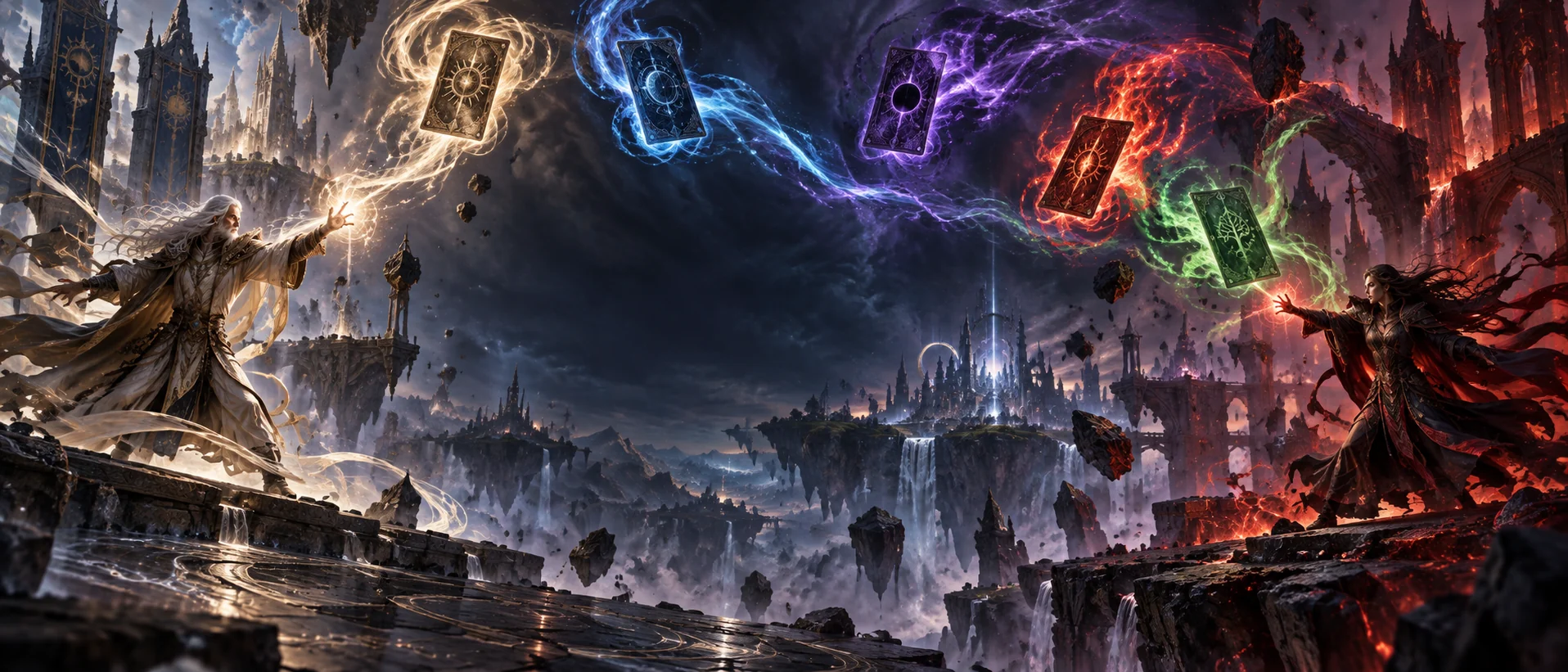
Step 1 • What is Magic?
Magic: The Gathering is a collectible strategy card game. You choose the cards, build the deck, and discover a play style that can be competitive, creative, social—or all three.
Where it began
Game designer Richard Garfield imagined a card game in which players would own different pieces and combine them however they wished. Magic first went on sale in August 1993 and helped establish the trading-card-game genre.
Garfield visited the young Wizards of the Coast to pitch another game. The conversation inspired a portable card game built from collectible pieces.
The first release reached hobby and game stores in the United States. Players immediately began inventing decks, strategies, and new ways to play.
New cards, settings, and formats keep changing what is possible while the central idea remains the same: your deck expresses your choices.
The purpose of the game
At the table, your cards represent lands, creatures, artifacts, and spells. You use them to overcome an opponent’s plan while advancing your own.
Winning provides a clear goal, but it is not the only point. Magic is designed to create interesting decisions, surprising interactions, memorable stories, and reasons to try a new deck next time.
Different formats can turn the same core rules into a focused duel, a four-player social game, or an event where everyone builds from newly opened cards.
Why people keep playing
Some players care most about winning. Others love deckbuilding, art, stories, collecting, or a weekly night with friends. The game leaves room for all of them.
Every draw creates new decisions. You learn to manage resources, predict opponents, and improve over hundreds of games.
Thousands of cards can be combined into decks that reflect a favorite character, mechanic, color, theme, or clever interaction.
Each set explores a different plane with its own visual identity, characters, conflicts, and stories told through the cards.
Kitchen tables, local stores, online matches, and large events give players many ways to meet, teach, trade, and compete.