Draw from your library.
Your deck begins face down as your library. Draw seven cards for your opening hand, then draw one card on most turns.
Step 2 • How to play
Start with the goal, learn how lands pay for spells, then follow the same turn sequence until one player wins.
The goal
You bring a deck of lands, creatures, and other spells. In a typical two-player game, each player starts at 20 life. Reduce your opponent to 0 life before they do the same to you.
Your deck begins face down as your library. Draw seven cards for your opening hand, then draw one card on most turns.
You may normally play one land each turn. Turn—or tap—lands sideways to make mana, then spend that mana to cast cards from your hand.
Creatures attack and block. Instants and sorceries create one-time effects. Artifacts and enchantments usually remain on the battlefield.
A map of the table
This is a common paper Magic setup, viewed from your seat. Exact placement can vary—the important part is keeping each group of cards clear.
Cards move: draw from your library into your hand, cast permanents onto the battlefield, and put destroyed or used cards into your graveyard.
Mana disappears: unused mana normally empties from your mana pool at the end of each step and phase.
The rhythm of a turn
You do not need to memorize every rule. Learn this loop first, play a few turns, and let the details arrive as you need them.
Ready your cards, then draw for the turn.
Play a land and cast spells you can afford.
Attack your opponent. They decide which creatures block.
Cast more spells or prepare for the next turn.
Finish end-of-turn effects and pass the turn.
How combat works
Creatures usually cannot attack the turn they enter. On later turns, choose attackers and tap them. The defending player chooses blockers, then creatures deal damage at the same time.
Choose which ready creatures attack. They attack your opponent, not individual creatures.
Your opponent chooses which untapped creatures stand in front of the attackers.
Unblocked attackers damage the player. Blocked creatures damage one another; lethal damage destroys a creature.
Choose where to learn
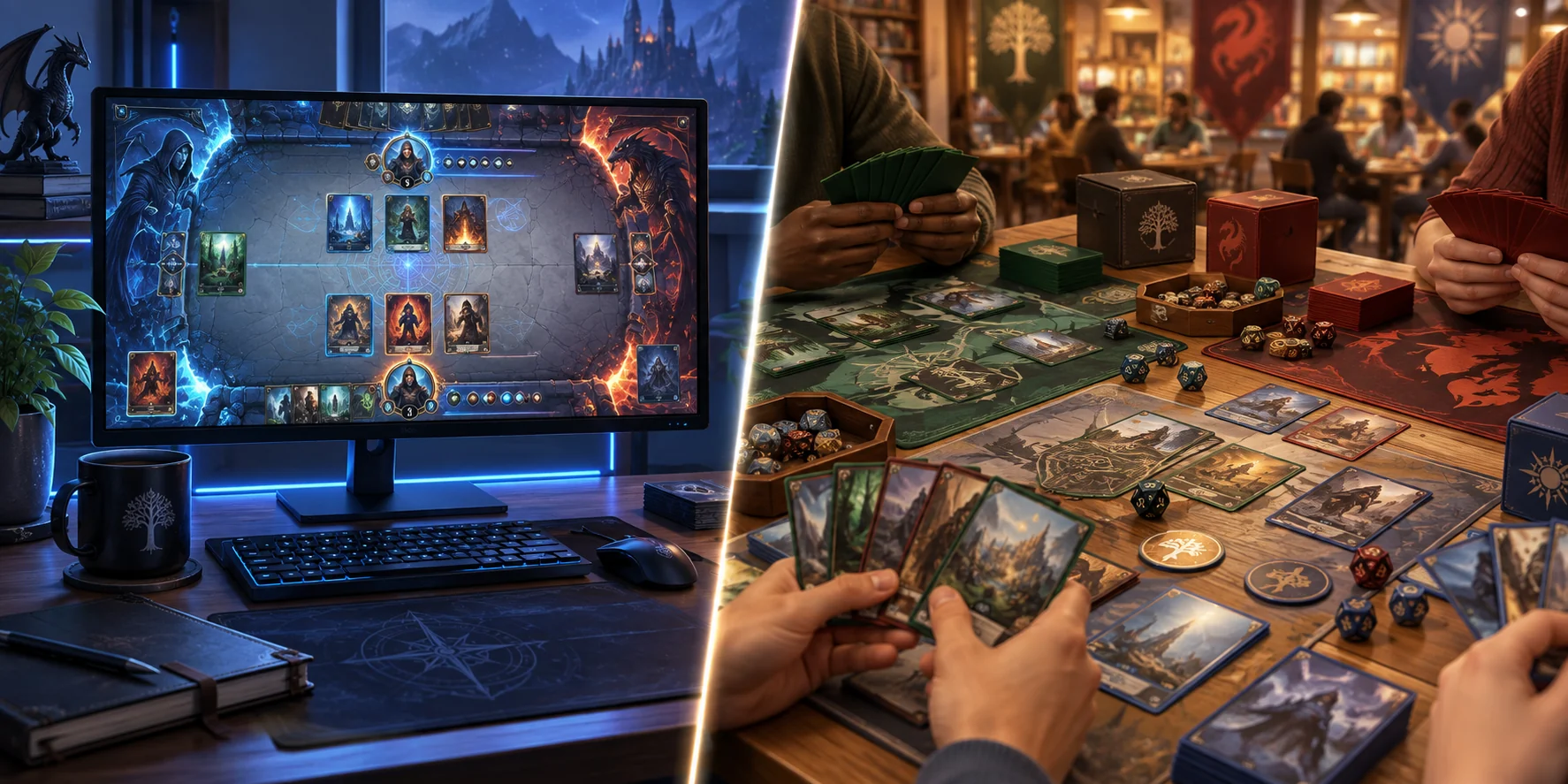
MTG Arena teaches the rules as you play. Paper Magic adds face-to-face conversation, collecting, and local events. Both use the same strategic foundation.
Fast feedback. Zero bookkeeping.
Arena automates rules, tracks triggers, and includes a guided tutorial. It is the easiest place to see how mana, combat, and card effects fit together.
Cards in hand. Players at the table.
A friend or local game store can walk you through a first match. Ask for a beginner deck and say you are learning—most players will explain their cards as they go.